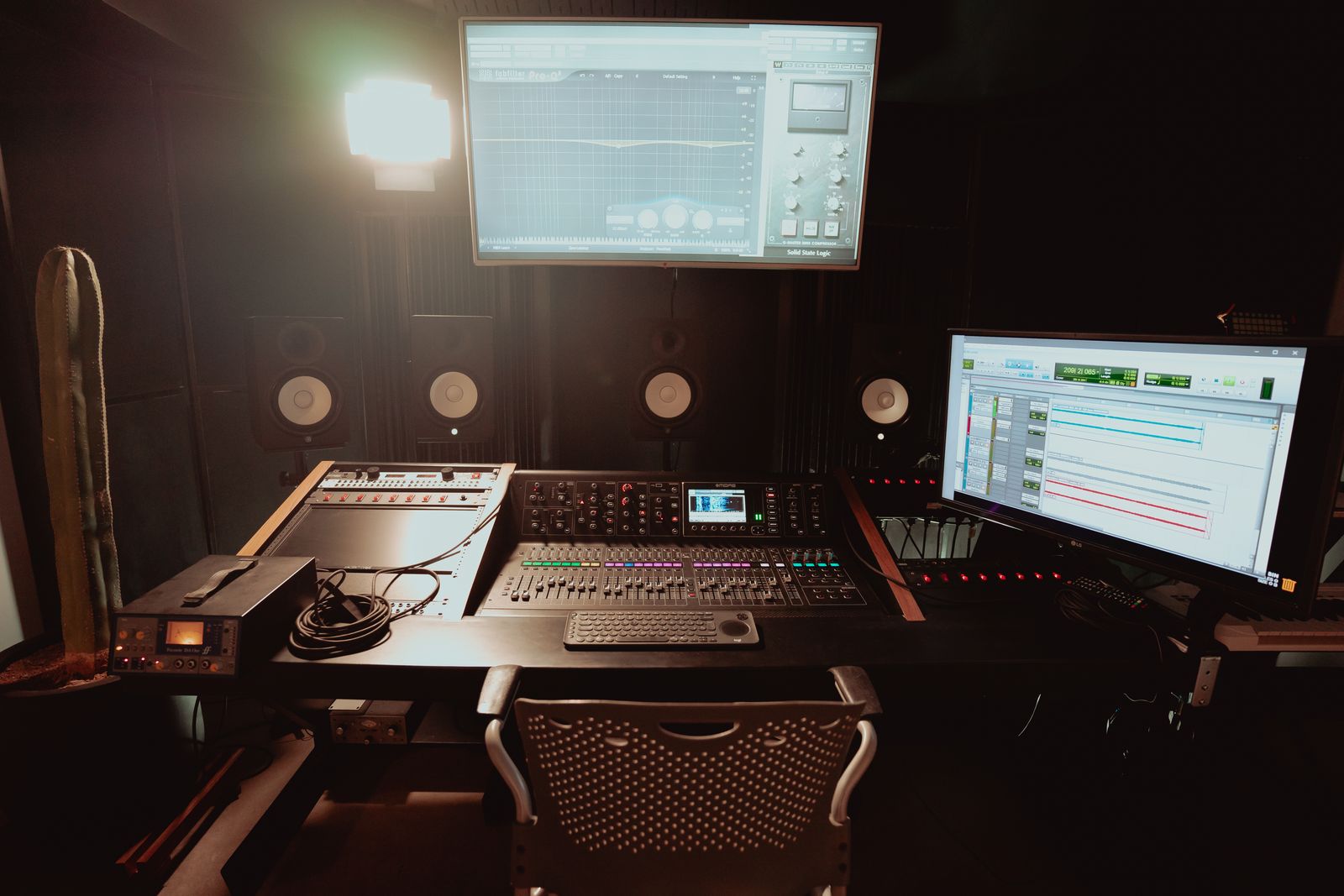
When a place becomes sound.
A microphone pair records more than two channels: it offers a perspective on the relationship between musicians and space.
Begin with the relationship to the room.
Before pursuing an impression of spaciousness, a recording must decide where to listen from. Moving towards or away from a source changes its relationship with its surroundings. No ideal position can be inferred from a room’s historical value alone: the result must be tested in that place, with those musicians and the chosen recording system.
A useful working approach is to document the first placement and change one variable at a time. A photograph of the space, a noted height and a few words about orientation become more useful when they allow a return to a previous condition. Listening memory is valuable, but a concrete note prevents each comparison from starting at a point that can no longer be reconstructed.

Two channels, more than one principle.
DPA’s guide to stereo recording describes how polar pattern, angle and microphone spacing contribute to level and time differences between channels. [1] The MIT recording course notes provide another reference for navigating the configurations. [2] Acronyms name solutions; they are not formulas guaranteeing the same outcome in every room.
At an introductory level, coincident and spaced pairs approach the construction of an image differently. Before choosing a preference, it is worth asking what we want to make stable: the instruments’ apparent positions, balance, detail or relationship with the environment. These aims can pull against one another. A convincing recording emerges from judging that balance, rather than from the number of microphones employed.
Microphone placement is also a choice of viewpoint.Musicforgestudio Journal
Space needs checking when it narrows too.
DPA notes that summing an AB pair to mono can produce comb filtering. [1] The point is not to prohibit a technique, but to know which consequence to check. A recording intended for different listening contexts deserves checks that include the summed signal, without assuming that everyone will use the stereo arrangement employed during the session.
Short extracts can therefore be heard in stereo and mono, noting changes in instrumental presence and timbral continuity. The check need not make the two experiences identical. It helps reveal transformations that may have escaped notice and supports a conscious decision about their suitability for the project. Width alone does not describe everything a recording should preserve.
Keep the decisions too.
After a session, a brief record can describe configuration, distances, height, orientation, the musicians’ positions and observations about noise. Its value is not the number of completed boxes: it lies in reconstructing a decision and understanding the conditions that made it reasonable. Documentation preserves doubts as well as the final placement.
A place enters the story of sound when it becomes an observable relationship: a chosen distance, a decay heard, a balance reconsidered. Techniques help formulate and repeat these decisions; they do not replace time spent listening to them. The room retains its presence without becoming an abstract promise of beauty resting only on its name.
05 / References
and sources
Manufacturer technical guide: interchannel differences, configurations and the limits of summing AB to mono. Not a commercial endorsement.
Sources checked on 3 November 2026.
University teaching material from Recording Techniques and Audio Production, autumn 2016.
Listening and working suggestions are editorial interpretations; documented facts link to the numbered references.
06 / Author
Musicforgestudio’s editorial voice explores artists, musical culture and sound research.