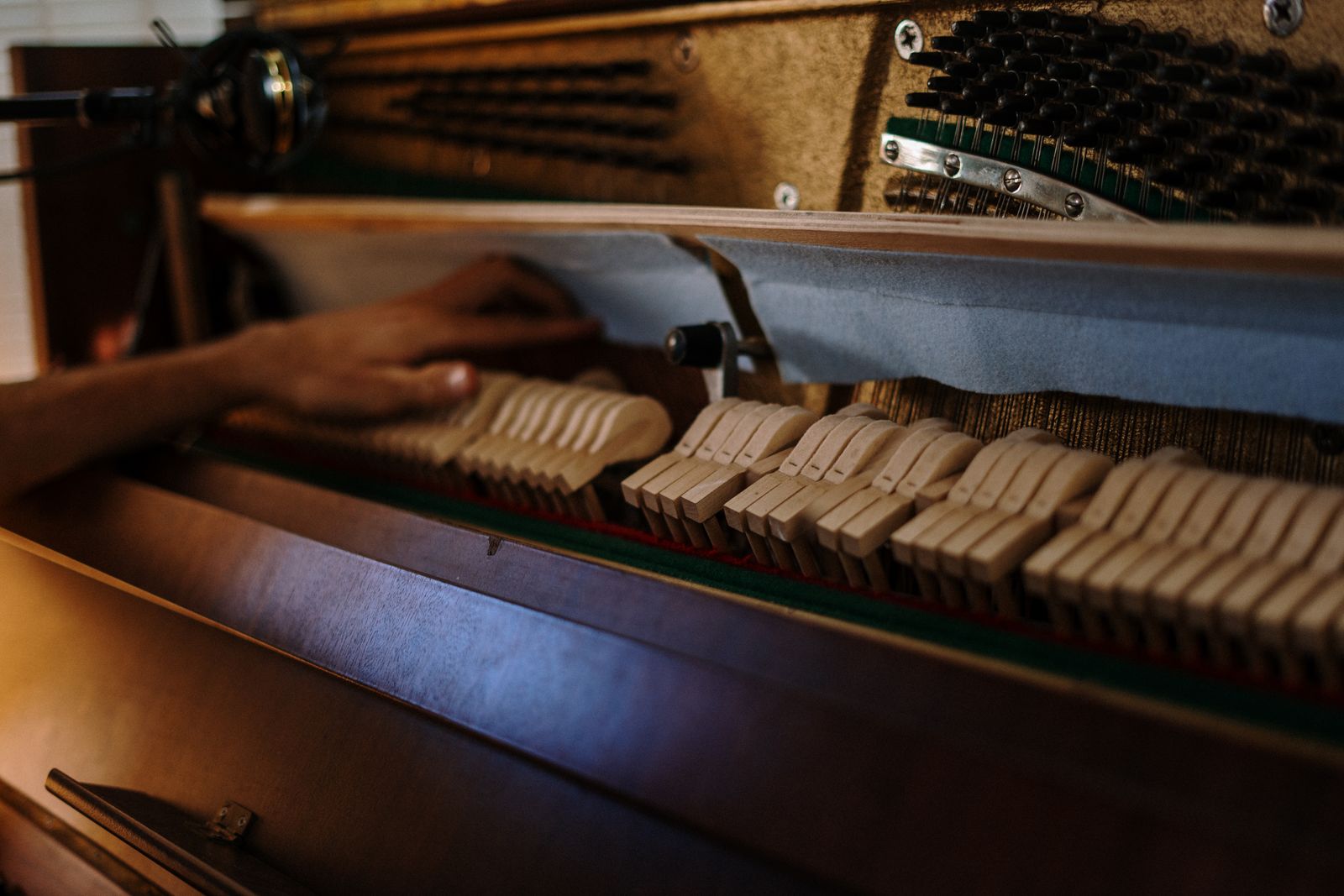
Debussy, beyond the mist.
French piano music does not live on vagueness: beneath the light and resonance is writing that demands precision, memory and imagination.
A composer too often left out of focus.
There is a Debussy we know before we even listen: water, light, dissolution. It is an alluring image, but it can turn a musical language into a photographic filter. If everything must seem suspended, no detail carries the weight of a decision. Yet it is precisely the detail—an attack, a duration, the relationship between registers—that can restore the force that the adjective impressionist sometimes lulls to sleep.
In a conversation with Gabriella Fumarola for Amadeus, Matteo Fossi draws attention to the density of expressive and phrasing indications even in the early pieces. The pianist also asks us to consider that repertoire on its own terms, rather than merely as a prelude to the mature works. [1] It is a fruitful starting point: listening to Debussy also means freeing him from the retrospective image we have constructed of his style.
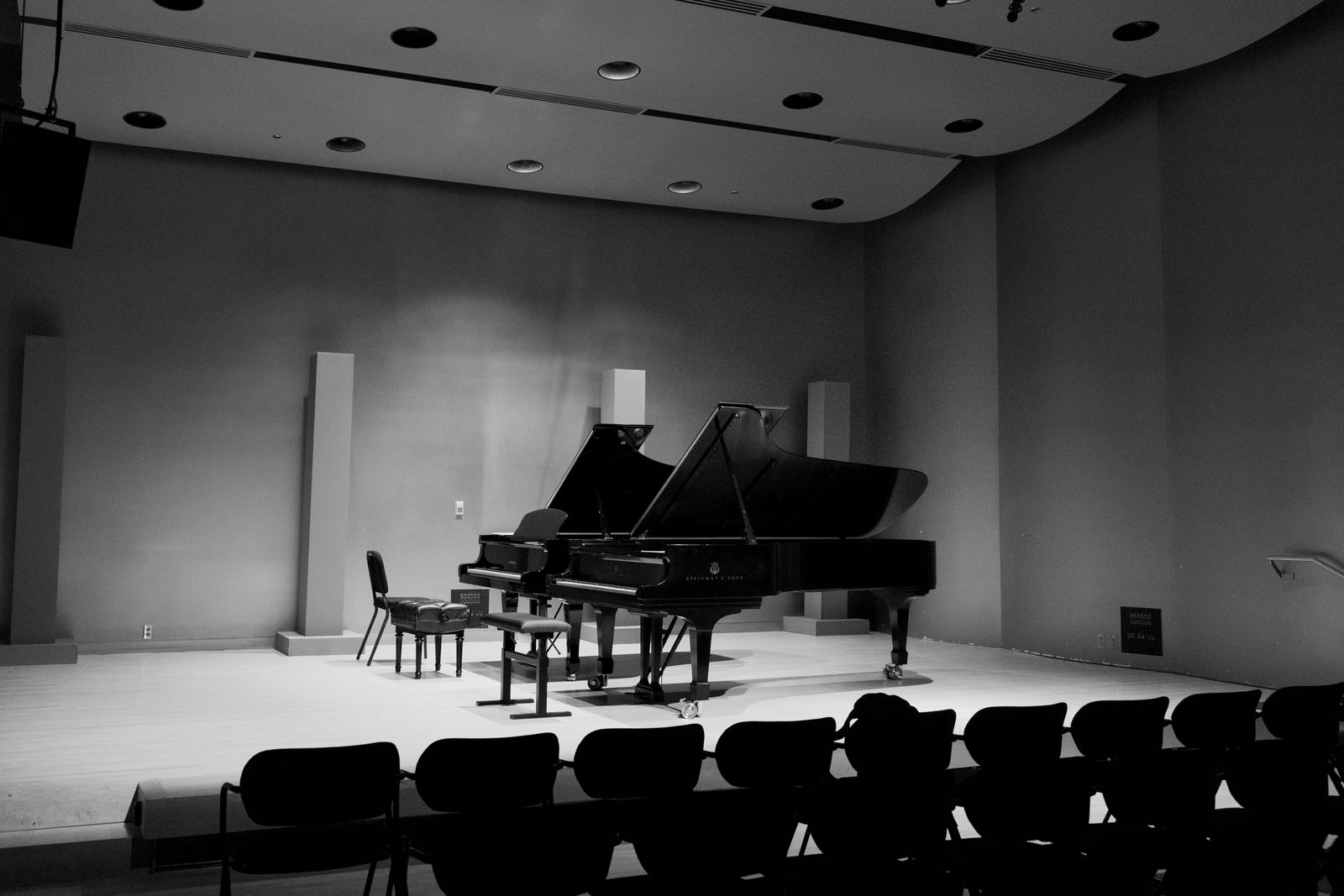
Timbre needs distinct planes.
Another Amadeus interview, with Alessandra Ammara, takes the question inside the pianist’s work. Ammara discusses the need to give sound different timbral planes and the role that knowledge of a poetic and visual context can play in study. [2] This is more than decoration: culture prepares the imagination, but the keyboard must ultimately make the relationships distinct.
Think of a texture in which one line must remain close while another recedes. If the pedal covers everything with the same resonance, that distance disappears. When the pianist preserves the difference between presences, colour acquires depth. Elegance then ceases to mean softness alone: a sound can be delicate and sharply defined, mobile without becoming indistinct.
Colour becomes music when we recognise the distance between voices.Musicforgestudio Journal
Return to the early pages.
In the same interview, Fossi describes his interest in less frequently heard Debussy and in the relationship between those works and their musical environment. [1] The suggestion reaches beyond a discography: a composer’s catalogue is not a staircase leading inevitably to a few masterpieces. Familiar works can illuminate the others, but they can also obscure them if every page is asked to anticipate what we already know.
One possible route places the Suite bergamasque alongside the Préludes without looking only for differences in maturity. Listen to how the presentation of a gesture changes, how long an idea remains exposed and what role the distance between episodes assumes. Titles offer orientation, but the ear can stay with the construction: what returns, what changes and what is left suspended.
Suggestion is a consequence.
An interpreter may be tempted to create an atmosphere immediately. A listener may recognise it at once and stop asking questions. Either way, we risk reaching the conclusion before following the path. Debussy allows us instead to follow a sonic image as it forms: not just what it evokes, but how that evocation becomes necessary through the precision of its distances.
The mist, then, can remain in the landscape. It need not settle between the parts. This piano music does not require a succession of vaporous adjectives to explain its beauty: we can seek it in the quality of a relationship, in the balance that makes a voice present without forcing it into the foreground. Heard this way, Debussy loses none of his mystery. He recovers the contours that allow mystery to exist.
05 / References
and sources
Interview associated with the 2018 centenary: early repertoire, detailed indications, music and literature.
Sources checked on 3 November 2026.
The pianist’s first-hand account of timbral planes and cultural context. This MFS essay develops its own reading rather than reproducing the interview.
Listening and working suggestions are editorial interpretations; documented facts link to the numbered references.
06 / Author
Musicforgestudio’s editorial voice explores artists, musical culture and sound research.